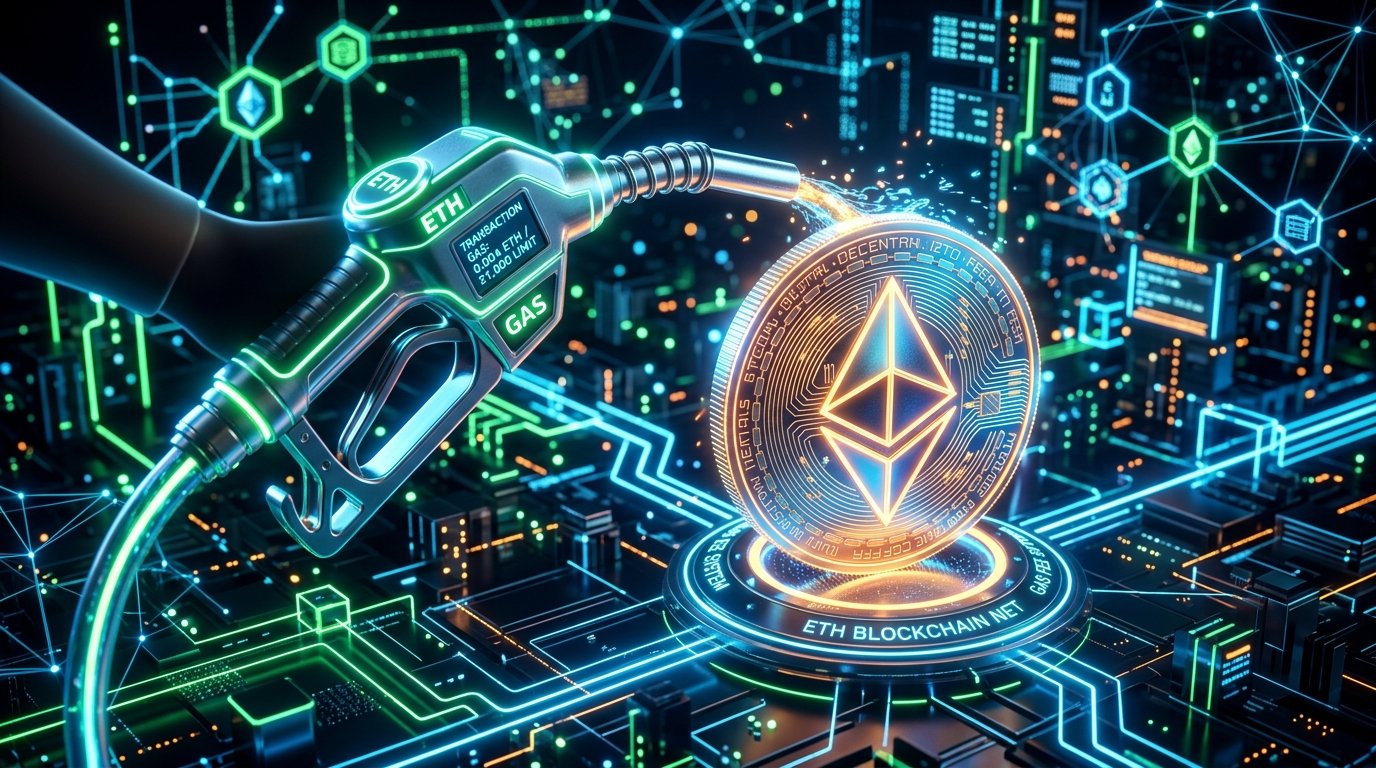
If you’ve ever tried to send cryptocurrency and wondered why the amount you receive is slightly different from what you expected, you’ve probably encountered crypto gas fees.
Gas fees were one of the first things that confused me when I started using blockchain networks. I understood that sending cryptocurrency involved a transaction, but I didn’t immediately understand why the network charged an additional fee or why that fee could change from one minute to the next.
Then there’s the terminology.
You might see words such as gas price, gas limit, network congestion, priority fee, base fee, and transaction fee. For someone new to cryptocurrency, it can feel unnecessarily complicated.
The good news is that the basic idea is fairly simple.
A blockchain needs computers or validators to process transactions. Gas fees are a way of paying for the computational work and network resources required to process certain transactions.
The exact fee system depends on the blockchain. Ethereum, for example, uses a gas-based fee model, while Bitcoin uses a different transaction-fee system.
In this guide, I’ll explain what crypto gas fees are, why they change, how Ethereum gas fees work, and practical ways to reduce unnecessary transaction costs.
What Are Crypto Gas Fees?
A gas fee is a transaction fee associated with performing operations on certain blockchain networks.
The word “gas” is especially associated with Ethereum and networks using similar models.
Think of gas as the fuel required to perform operations on the blockchain.
For example, a transaction might require the network to:
- Verify a digital signature.
- Update an account balance.
- Execute smart-contract code.
- Change blockchain state.
More complicated operations can require more computational work.
That’s why a simple transfer and a complicated decentralized-finance transaction may have very different costs.
Why Do Blockchain Networks Charge Fees?
Running a blockchain network requires resources.
Computers participating in the network need to:
- Process transactions
- Store blockchain data
- Communicate with other nodes
- Execute smart contracts
- Validate network activity
Transaction fees serve several purposes.
They can compensate network participants and, importantly, help prevent people from flooding the blockchain with unlimited transactions.
Without some form of cost, an attacker could potentially submit huge numbers of unnecessary operations and consume network resources.
Gas Fees vs. Regular Transaction Fees
Not every cryptocurrency uses the term “gas fee.”
For example, Bitcoin generally refers to transaction fees, while Ethereum commonly uses the concept of gas.
The underlying idea is similar: users pay a fee to have their transactions processed by the network.
So if you’re using Bitcoin, don’t worry about looking for an Ethereum-style gas setting.
Different blockchains have different fee mechanisms.
How Ethereum Gas Fees Work
Ethereum’s fee system can look complicated at first.
A simplified Ethereum transaction fee can be thought of as involving:
Gas Used × Fee Per Unit of Gas
Ethereum’s modern fee structure also includes a base fee and potentially a priority fee.
Base Fee
The base fee is determined by the network according to its protocol rules and current demand.
The base fee is not something you simply choose at random.
Priority Fee
A priority fee, often called a tip, can be included to incentivize validators to prioritize a transaction.
Gas Used
Different operations consume different amounts of gas.
A straightforward transfer generally requires less computation than interacting with a complex smart contract.
This means that simply looking at the cryptocurrency amount you’re sending doesn’t tell you the entire transaction cost.
Why Do Gas Fees Change?
This is one of the biggest sources of confusion for beginners.
You might send a transaction in the morning and see a relatively small fee.
Later that day, the same type of transaction could cost considerably more.
Why?
Network demand.
When many people are trying to use a blockchain at the same time, demand for block space increases.
This can result in higher fees.
It’s similar to traffic on a busy road.
When the road is empty, you move easily.
When thousands of cars arrive at the same time, congestion increases.
Blockchain networks can experience a similar effect.
What Is Network Congestion?
Network congestion occurs when demand for blockchain processing is high relative to available block space or processing capacity.
Congestion can happen when:
- A popular token is being traded heavily
- A new NFT collection launches
- A major market event occurs
- A popular dApp attracts many users
- Large numbers of users submit transactions simultaneously
During busy periods, transaction costs can increase.
This is one reason I don’t recommend rushing into a transaction just because you’re worried about missing an opportunity.
If the transaction isn’t urgent, checking the network conditions first can sometimes save money.
A Simple Example
Suppose you want to move $100 worth of cryptocurrency.
You check the wallet and see a transaction fee equivalent to $8.
At that point, you have a decision:
Send now: $8 fee
Wait for lower network demand: potentially lower fee
If the transaction isn’t time-sensitive, waiting may make sense.
But there’s no guarantee the fee will fall. Network conditions can change in either direction.
That’s why checking the current fee before confirming is important.
Why Smart Contracts Can Cost More
A simple cryptocurrency transfer may involve relatively straightforward operations.
A smart-contract interaction can be much more complicated.
For example, interacting with a decentralized exchange may involve several operations.
You might:
- Approve a token.
- Execute a swap.
- Interact with a liquidity pool.
- Update contract state.
Each operation can consume computational resources.
That’s why a DeFi transaction can cost more than a basic wallet-to-wallet transfer.
Gas Limit vs. Gas Price
These two terms often confuse beginners.
Gas Limit
The gas limit represents the maximum amount of gas allocated for a transaction or operation.
It is not necessarily the amount you will actually use.
Gas Price
Gas price refers to the amount paid per unit of gas under the relevant fee model.
Modern Ethereum transactions use a more specific fee structure involving the base fee and priority fee.
For ordinary users, the important lesson is:
Don’t randomly change advanced gas settings unless you understand what you’re changing.
Your wallet will often provide an estimated fee and appropriate settings.
How to Check Gas Fees Before Sending
You don’t have to blindly accept whatever fee appears in your wallet.
Before confirming a transaction:
Step 1: Open Your Wallet
Open your wallet application, such as MetaMask, on your phone or browser.
Step 2: Enter the Transaction
Enter the recipient address and amount.
Step 3: Review the Estimated Fee
Your wallet should show an estimated network fee.
Don’t focus only on the cryptocurrency amount.
Look at the total transaction cost.
Step 4: Check the Network
Make sure you’re using the correct blockchain network.
Sending an asset on the wrong network can create serious problems.
Step 5: Decide Whether the Transaction Is Urgent
If the transaction can wait, you may choose to check network conditions later.
Step 6: Confirm Only After Checking Everything
Verify:
- Recipient address
- Asset
- Network
- Amount
- Estimated fee
Then confirm the transaction.
7 Practical Ways to Reduce Crypto Gas Fees
There isn’t a magic button that eliminates blockchain fees.
However, you can avoid paying more than necessary.
1. Avoid Peak Network Congestion
One of the easiest strategies is simply choosing a less busy time.
If you’re making a non-urgent transaction, check current network conditions first.
Don’t assume that a particular hour will always be cheapest, though.
Blockchain activity changes based on market conditions and global usage.
2. Compare Networks
Some assets and applications are available across multiple blockchain networks.
Depending on what you’re doing, another supported network may have lower transaction costs.
However, don’t choose a network simply because its fee is cheaper.
Check whether:
- The wallet supports it
- The receiving platform supports it
- The asset exists on that network
- The application supports the network
- You understand the transfer process
A cheap transaction is not useful if the funds end up somewhere you cannot access.
3. Use Layer-2 Networks When Appropriate
Ethereum Layer-2 networks are designed to process transactions with different scalability characteristics and can often offer lower transaction costs than performing the same activity directly on Ethereum mainnet.
Examples include networks such as:
- Arbitrum
- Optimism
- Base
- zkSync
Support varies by wallet and application.
Always verify the network before transferring funds.
4. Avoid Unnecessary Transactions
This sounds obvious, but it can save money.
Before signing a transaction, ask:
Do I actually need to do this right now?
I’ve seen beginners make several small transactions simply because they were experimenting with different wallets.
Each transaction can cost money.
Planning several actions together can sometimes reduce unnecessary activity.
5. Check Fees Before Approving Tokens
Token approvals are an easy expense to overlook.
Some decentralized applications require an approval transaction before you can use a token.
That approval can cost a network fee.
If you later perform the actual transaction, you may pay another fee.
Understanding this before interacting with a DeFi application helps avoid surprises.
6. Use Fee Estimates Carefully
Wallet estimates are useful, but they’re estimates.
Network conditions can change.
If you’re making a transaction during a highly volatile period, the estimated fee may change before the transaction is confirmed.
Always check the final confirmation screen.
7. Don’t Change Advanced Settings Without Understanding Them
Some wallets allow advanced users to customize fee settings.
That’s useful in certain situations, but beginners can create unnecessary problems by changing values they don’t understand.
If you’re not sure what a setting does, use the wallet’s recommended configuration or research the setting first.
Can You Completely Avoid Gas Fees?
Usually, no.
If a blockchain transaction requires network resources, some form of fee may be necessary.
Some applications may subsidize fees or use systems where users don’t directly pay them in the same way.
But that doesn’t mean the underlying cost disappears.
Someone or something is still paying for network resources.
Be skeptical of websites promising completely free blockchain transactions without clearly explaining how the costs are handled.
Why Failed Transactions Can Still Cost Money
This surprises many beginners.
You might think:
“If my transaction failed, why did I pay a fee?”
Because validators or network participants may have already performed computational work processing the transaction.
A transaction can fail at the smart-contract level while still consuming network resources.
Therefore, you may still pay a network fee even though the desired action wasn’t completed.
This is one reason it’s important to understand the decentralized application you’re using before approving transactions.
Gas Fees and Crypto Exchanges
Gas fees can work differently when you’re using a centralized cryptocurrency exchange.
Suppose you buy Ethereum through an exchange and leave it in your exchange account.
You may not see a blockchain transaction fee every time you move between internal exchange balances.
But when you withdraw cryptocurrency to an external wallet, the exchange may charge a withdrawal fee.
That fee isn’t necessarily identical to the exact blockchain network fee.
Each exchange has its own fee structure.
Always check the exchange’s current withdrawal information before transferring funds.
Common Gas Fee Mistakes Beginners Make
Mistake 1: Looking Only at the Amount Being Sent
Sending $20 and paying a $5 network fee is very different from sending $2,000 and paying the same $5 fee.
Always consider the fee relative to the transaction.
Mistake 2: Using the Wrong Network
This can be much more serious than paying a high fee.
Always confirm the sending and receiving networks.
Mistake 3: Assuming All Blockchains Have the Same Fees
They don’t.
Each network has its own architecture, demand, and fee mechanism.
Mistake 4: Approving Unknown Smart Contracts
Don’t connect your wallet or approve transactions simply because a website promises rewards.
Research the application first.
Mistake 5: Changing Gas Settings Randomly
Advanced settings can affect transaction behavior.
Don’t experiment with important funds.
Mistake 6: Rushing During Market Volatility
When prices move quickly, people often rush.
That can lead to mistakes such as sending to the wrong address or accepting unexpectedly high fees.
Take a moment to check everything.
Are High Gas Fees a Problem for Blockchain?
They can be.
High transaction costs can make certain blockchain applications less practical for smaller transactions.
Imagine trying to send $10 while paying a $15 network fee.
That doesn’t make much economic sense.
This is one reason blockchain developers have worked on scaling solutions such as Layer-2 networks and other technologies designed to improve transaction capacity and reduce costs.
Gas Fees vs. Blockchain Scalability
Gas fees are closely connected to scalability.
A network with limited capacity can experience congestion when demand increases.
Developers have explored different approaches to improve scalability, including:
- Layer-2 networks
- Rollups
- Alternative consensus and execution designs
- Increased network capacity
- Off-chain processing
There isn’t one solution that works identically for every blockchain.
Each approach involves trade-offs.
How to Choose a Network Based on Fees
If transaction cost matters to you, don’t compare only the advertised fee.
Consider the entire experience.
Ask:
1. What am I trying to do?
Sending crypto, swapping tokens, using DeFi, or interacting with an NFT marketplace may have different requirements.
2. Does the application support the network?
A network is useless for your transaction if the application doesn’t support it.
3. Does the receiving wallet support it?
Check before sending.
4. Are there bridge requirements?
Moving assets between networks can involve additional steps and fees.
5. Is the network reliable enough for my use case?
The cheapest option isn’t automatically the best option.
A Beginner-Friendly Gas Fee Routine
Before every significant blockchain transaction, I recommend using this simple routine:
Check → Compare → Verify → Confirm
Check
Look at the estimated transaction fee.
Compare
If the transaction isn’t urgent, check whether network conditions are currently expensive.
Verify
Confirm the:
- Address
- Asset
- Network
- Amount
- Fee
Confirm
Only approve the transaction after everything looks correct.
This simple habit can prevent many expensive mistakes.
Final Thoughts
Crypto gas fees can seem confusing when you’re seeing them for the first time, but the basic idea is straightforward: blockchain networks need resources to process transactions, and fees help pay for those resources while discouraging unnecessary network activity.
The fee you pay can depend on the blockchain, transaction type, network demand, and fee structure.
You don’t always have control over the network’s price, but you can control how carefully you use it.
For non-urgent transactions, checking network conditions can help. Using an appropriate Layer-2 network can sometimes reduce costs. Most importantly, verify the network and transaction details before pressing the confirmation button.
The cheapest transaction isn’t necessarily the safest transaction. A slightly higher fee is often preferable to losing funds because you rushed, selected the wrong network, or interacted with the wrong application.
Once you understand how gas fees work, those strange numbers in your crypto wallet become much easier to interpret—and you’ll be far less likely to approve a transaction without knowing what you’re actually paying for.
