One of the first questions people ask after buying cryptocurrency is:
“Where should I store it?”
I remember making this mistake myself when I first started exploring crypto. I spent hours learning about Bitcoin, Ethereum, and blockchain, but almost no time learning about wallet security.
That is backwards.
Buying crypto is easy. Keeping it secure is the part that requires planning.
If you’ve been researching crypto wallets, you’ve probably come across two terms repeatedly:
- Hot Wallet
- Cold Wallet
At first, these names sound strange. They have nothing to do with temperature.
The difference is simple:
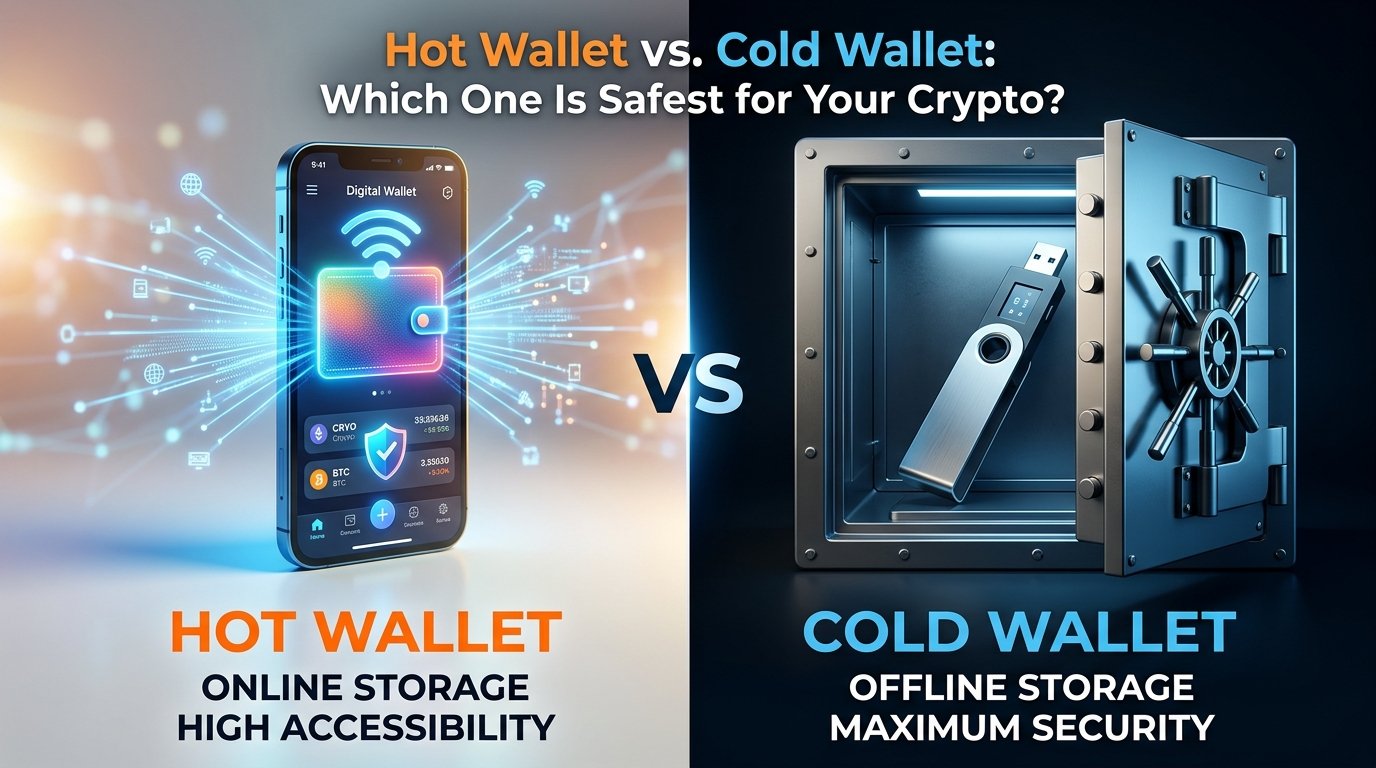
A hot wallet is connected to the internet.
A cold wallet stores wallet credentials offline.
Both types have advantages and disadvantages, and the right choice depends on how you use cryptocurrency.
This guide explains how hot wallets and cold wallets work, their pros and cons, common mistakes, and which type may fit different users.
What Is a Crypto Wallet?
Before comparing wallet types, it’s important to understand one thing:
A crypto wallet does not actually store cryptocurrency the way a physical wallet stores cash.
Cryptocurrency exists on a blockchain.
A wallet stores the credentials—such as private keys or recovery information—that allow you to access and manage assets associated with blockchain addresses.
Think of it like this:
- Blockchain = Public record of assets
- Wallet = Tool for managing access
- Private key = Secret credential
- Public address = Information you can share for receiving funds
If someone gains access to your private key or recovery phrase, they may be able to control your assets.
That is why wallet security matters.
What Is a Hot Wallet?
A hot wallet is a cryptocurrency wallet connected to the internet.
Examples include:
- MetaMask
- Trust Wallet
- Coinbase Wallet
- Phantom Wallet
- Exchange wallets
- Mobile wallet apps
- Browser extension wallets
Hot wallets are popular because they are convenient.
You can quickly:
- Send cryptocurrency
- Receive funds
- Connect to Web3 applications
- Trade assets
- Use decentralized applications (dApps)
- Check balances
I use hot wallets when testing applications, making small transactions, or exploring blockchain tools because they are fast and easy to access.
However, convenience comes with additional risks.
How Hot Wallets Work
A hot wallet runs on an internet-connected device such as:
- Smartphone
- Laptop
- Desktop computer
- Browser extension
When you approve a transaction, the wallet signs it using your credentials.
Because the device is connected to the internet, users need to be careful about:
- Phishing websites
- Fake wallet apps
- Malicious browser extensions
- Malware
- Fake support scams
Most major wallet losses are not caused by blockchain failures.
They are often caused by:
- Sharing recovery phrases
- Approving malicious transactions
- Visiting fake websites
- Installing unsafe software
Advantages of Hot Wallets
Easy to Use
Hot wallets are beginner-friendly.
Installing MetaMask or Trust Wallet usually takes only a few minutes.
Fast Transactions
You can send and receive cryptocurrency quickly.
Web3 Compatibility
Hot wallets work well with:
- Decentralized exchanges
- NFT marketplaces
- Blockchain games
- DeFi platforms
Free or Low Cost
Many software wallets are free to download.
Disadvantages of Hot Wallets
Internet Exposure
Internet-connected devices can face more threats.
User Mistakes
Approving a malicious transaction can create problems.
Device Risks
Compromised devices can create security issues.
Phishing
Fake websites can trick users into revealing sensitive information.
What Is a Cold Wallet?
A cold wallet stores wallet credentials offline.
Examples include:
- Hardware wallets
- Offline storage methods
- Dedicated signing devices
Popular hardware wallets include:
- Ledger
- Trezor
- Keystone
A cold wallet is designed so that sensitive credentials remain isolated from everyday internet activity.
This can reduce certain online risks.
How Cold Wallets Work
A hardware wallet is a physical device.
When you want to approve a transaction:
- Create the transaction.
- Send it to the hardware wallet.
- Review the details.
- Confirm using the device.
This extra step may reduce the risk of accidentally approving transactions without verification.
I know people who keep a small amount of crypto in a hot wallet for daily use while storing long-term holdings in a hardware wallet.
This is similar to keeping spending money in a regular wallet while storing savings more securely.
Advantages of Cold Wallets
Better Protection From Online Threats
Credentials remain separated from everyday internet browsing.
Suitable for Long-Term Storage
Many users prefer cold wallets for assets they do not trade frequently.
Extra Verification
Hardware devices often require physical confirmation.
Reduced Exposure
Less interaction with websites may reduce risk.
Disadvantages of Cold Wallets
Cost
Hardware wallets are not free.
Less Convenient
Transactions require extra steps.
Recovery Phrase Responsibility
Losing recovery information can create serious problems.
Physical Damage or Loss
Devices can be lost, damaged, or stolen.
That is why secure recovery backups matter.
Hot Wallet vs. Cold Wallet: Quick Comparison
| Feature | Hot Wallet | Cold Wallet |
|---|---|---|
| Internet Connection | Yes | No |
| Convenience | High | Medium |
| Security Against Online Threats | Lower | Higher |
| Cost | Usually Free | Usually Paid |
| Best For | Daily Use | Long-Term Storage |
| Web3 Access | Excellent | Limited/Additional Steps |
| Beginner Friendly | Yes | Moderate |
Which Wallet Is Safer?
This is where many articles oversimplify things.
A cold wallet generally provides stronger protection against certain online threats.
However, no wallet is completely risk-free.
A hardware wallet cannot protect you if:
- You reveal your recovery phrase
- You approve a malicious transaction
- You buy a fake hardware wallet
- You store your backup insecurely
Similarly, a hot wallet can still be used safely when users follow good security practices.
The safest approach depends on:
- The amount of crypto
- How often you transact
- Your technical knowledge
- Your security habits
Who Should Use a Hot Wallet?
A hot wallet may suit people who:
- Use crypto frequently
- Trade regularly
- Explore Web3 applications
- Hold smaller amounts
- Need convenience
Many beginners start with hot wallets because setup is simple.
Who Should Use a Cold Wallet?
A cold wallet may suit people who:
- Hold larger amounts
- Invest for the long term
- Want stronger offline protection
- Do not make daily transactions
Many experienced users combine both wallet types.
The Hybrid Strategy Many Users Prefer
One approach I often see is:
Hot Wallet
Used for:
- Daily transactions
- NFTs
- DeFi
- Testing applications
Cold Wallet
Used for:
- Long-term holdings
- Savings
- Larger balances
This reduces the amount exposed to everyday online activity.
Common Wallet Mistakes
Mistake #1: Keeping Everything in One Wallet
Separating funds can reduce risk.
Mistake #2: Saving Recovery Phrases in Screenshots
Cloud backups can create additional risks.
Mistake #3: Trusting Fake Support
Legitimate support should not ask for recovery phrases.
Mistake #4: Clicking Unknown Links
Phishing remains a major threat.
Mistake #5: Buying Hardware Wallets From Unofficial Sources
Buy only from trusted sources.
A Simple Security Checklist
Before storing crypto:
- Back up recovery phrases securely
- Verify websites carefully
- Use strong passwords
- Update devices regularly
- Avoid suspicious links
- Separate long-term and spending funds
- Consider hardware wallets for larger holdings
Are Exchange Wallets Hot Wallets?
Yes.
Most exchange accounts are considered hot storage because assets are managed through internet-connected systems.
Exchanges can be convenient, but they operate differently from self-custody wallets.
Understanding who controls wallet credentials is important before choosing where to store assets.
Final Thoughts
Choosing between a hot wallet and a cold wallet is not about finding one perfect option.
It is about matching security with your needs.
For learning, experimenting, and small transactions, hot wallets are convenient.
For long-term storage and larger balances, many users prefer cold wallets because they reduce exposure to online threats.
The most important lesson is simple:
Don’t spend all your time researching coins while ignoring wallet security.
A few minutes spent learning how wallets work can help prevent mistakes that are far more expensive than the wallet itself.