When I first started using cryptocurrency, one of the things I found surprisingly annoying was dealing with long wallet addresses.
Instead of sending money to a simple name like john.eth, you might have to copy something that looks like:
0x7a...91F3
One wrong character can send funds to the wrong address, and blockchain transactions generally aren’t easy to reverse.
This is where Web3 domains come in.
A Web3 domain can provide a human-readable name that can be associated with blockchain addresses and other decentralized information.
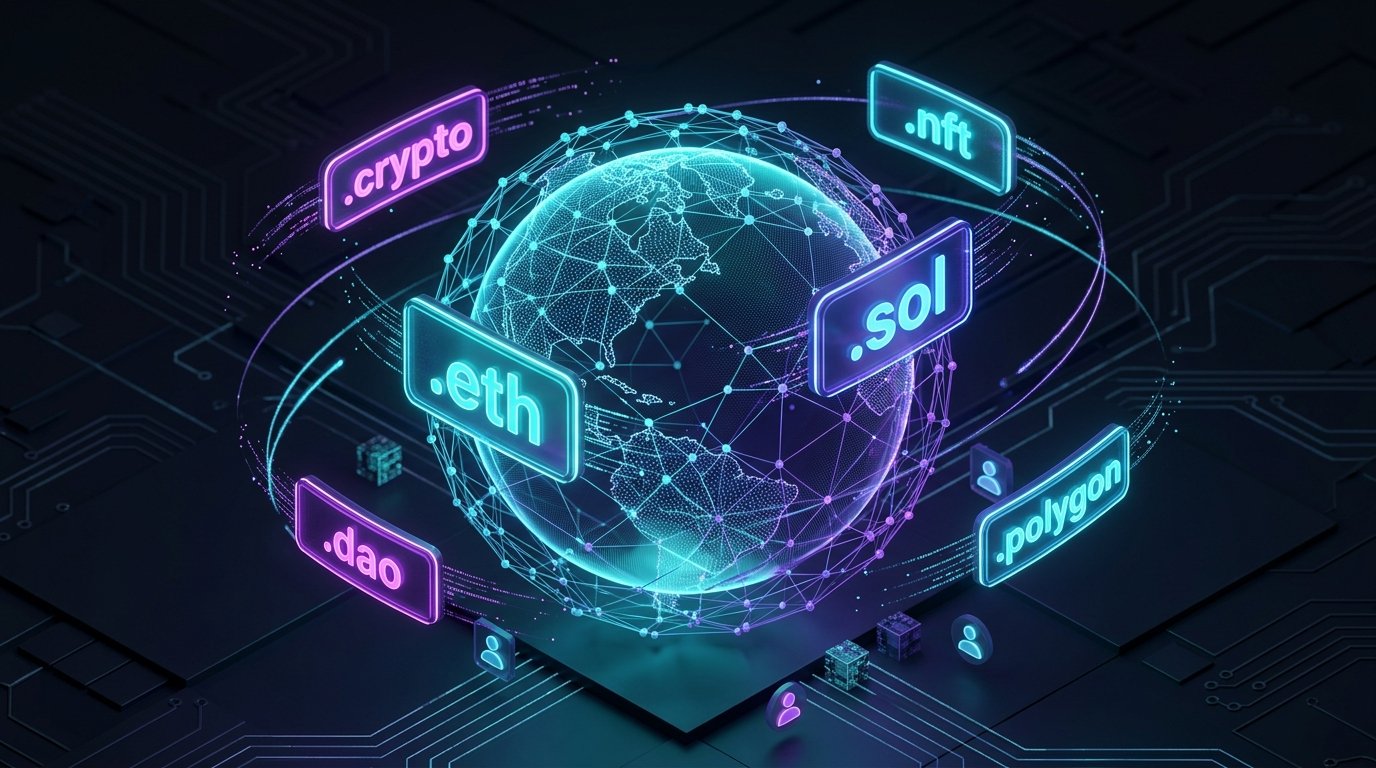
Two names you’ll commonly encounter are .eth and .sol.
The important thing to understand is that these aren’t simply cryptocurrency versions of traditional website domains such as .com. They can serve as blockchain identities, wallet aliases, and sometimes gateways to decentralized applications.
Let’s break down how they work and what beginners should know before purchasing one.
What Is a Web3 Domain?
A Web3 domain is a blockchain-based name that can be associated with cryptocurrency wallet addresses and other Web3 information.
Traditional domains such as:
example.com
are generally managed through the conventional Domain Name System (DNS).
Web3 naming systems use blockchain-based infrastructure to create names that can represent blockchain addresses and other information.
For example, instead of asking someone to send cryptocurrency to a long wallet address, you may be able to provide a compatible Web3 name.
The exact functionality depends on the naming system, wallet, blockchain, and application you’re using.
What Is an .eth Domain?
An .eth domain is associated with the Ethereum Name Service (ENS) ecosystem.
ENS provides human-readable names that can be associated with Ethereum addresses and other supported information.
For example:
yourname.eth
can potentially be used as a more readable identifier instead of repeatedly sharing a hexadecimal Ethereum address.
An ENS name can also contain additional records, depending on how it is configured.
This makes ENS more than just a shorter wallet address.
What Is a .sol Domain?
A .sol domain is associated with naming services in the Solana ecosystem.
Instead of using a long Solana wallet address, a compatible application may allow a user to interact using a human-readable .sol name.
For example:
yourname.sol
The exact capabilities depend on the relevant Solana naming infrastructure and the applications supporting it.
The basic idea is similar:
Long blockchain address → Human-readable Web3 name
.eth vs .sol: What’s the Difference?
The biggest difference is the blockchain ecosystem they are associated with.
| Feature | .eth | .sol |
|---|---|---|
| Ecosystem | Ethereum | Solana |
| Common naming system | ENS | Solana naming ecosystem |
| Main use | Ethereum/Web3 identity | Solana/Web3 identity |
| Wallet aliases | Supported by compatible wallets/apps | Supported by compatible wallets/apps |
| Blockchain | Ethereum | Solana |
| Typical format | name.eth | name.sol |
One important point: a .eth name isn’t automatically a universal replacement for your wallet address everywhere, and the same applies to .sol.
The wallet or application you’re using must support the naming system.
Why Do People Use Web3 Domains?
There are several practical reasons.
1. Easier Crypto Payments
A human-readable name is easier to remember than a long hexadecimal or base58 address.
Instead of sending someone a complicated address, you may be able to provide:
name.eth
or
name.sol
if the recipient’s wallet and network support it.
2. Web3 Identity
A Web3 domain can become part of your online blockchain identity.
For example, someone might use the same name across:
- NFT platforms
- DeFi applications
- Web3 communities
- Crypto profiles
- Blockchain wallets
This can make a blockchain address easier for other users to recognize.
3. Receiving Cryptocurrency
Depending on the naming system and wallet support, a domain can point to supported cryptocurrency addresses.
For example, an ENS name can have records associated with different supported assets and services.
However, always verify the destination address before sending a significant amount of cryptocurrency.
4. Decentralized Websites
Some Web3 naming systems can also be used with decentralized website technologies.
This is one of the more advanced uses.
Instead of a normal DNS domain pointing to a conventional web server, a Web3 name can be connected to decentralized content or services where supported.
The user experience isn’t always as straightforward as visiting a normal .com website, though.
How Does ENS Work?
ENS can be easier to understand if you think of it as a blockchain-based naming layer.
Imagine you have:
0x1234...ABCD
ENS allows that address to be associated with a readable name such as:
myname.eth
When a compatible application looks up the ENS name, it can retrieve the relevant blockchain information associated with that name.
A simplified process looks like this:
You enter myname.eth
↓
Application checks ENS records
↓
ENS returns the relevant address/information
↓
Application uses that information
This means you don’t necessarily have to manually copy the full wallet address every time.
How Does a .sol Domain Work?
The basic concept is similar.
A Solana naming system associates a readable name with blockchain information.
For example:
myname.sol
A compatible wallet or application can resolve the name and identify the corresponding Solana address.
The major difference is that .sol names operate within the Solana ecosystem rather than being Ethereum ENS names.
How to Register an .eth Domain
If you’re interested in an ENS name, the general process looks like this.
Step 1: Set Up an Ethereum-Compatible Wallet
You need a wallet capable of interacting with Ethereum applications.
MetaMask is one commonly used option.
Step 2: Visit the Official ENS Service
Don’t search random links from social media and connect your wallet to them.
Phishing websites can imitate popular Web3 services.
Step 3: Search for a Name
Enter the name you want and check whether it is available.
For example:
mybrand.eth
Step 4: Connect Your Wallet
Connect your Ethereum wallet to the official service.
Step 5: Complete Registration
If the name is available, follow the registration process.
You’ll generally need ETH to cover the required blockchain transactions and applicable registration costs.
Step 6: Confirm the Transaction
Your wallet will show the transaction and network fee.
Read the wallet request before confirming.
Step 7: Configure Your Records
After registration, you can configure supported records, such as the relevant wallet address.
How to Register a .sol Domain
The process is broadly similar, although the exact interface depends on the Solana naming service you’re using.
Step 1: Set Up a Solana Wallet
You’ll need a compatible Solana wallet.
Phantom is one well-known wallet in the Solana ecosystem.
Step 2: Use the Official Naming Service
Navigate to the official service rather than relying on an unknown third-party link.
Step 3: Search for Your Name
Check whether the .sol name you want is available.
Step 4: Connect Your Wallet
Connect your Solana wallet.
Step 5: Complete Registration
Follow the current registration instructions and approve the required transaction.
Step 6: Verify the Name
After registration, check that the name appears correctly in your wallet or supported applications.
Are Web3 Domains the Same as Normal Website Domains?
No.
This is one of the biggest misunderstandings among beginners.
A traditional domain such as:
mywebsite.com
usually works through the conventional DNS infrastructure and can be used for standard websites.
A Web3 domain such as:
myname.eth
has blockchain-related functionality and may be used as a wallet identifier or Web3 identity.
The two systems can sometimes interact through specific technologies, but they aren’t automatically interchangeable.
Buying an .eth name does not automatically give you a normal website like buying a .com domain would.
Are Web3 Domains NFTs?
Depending on the naming system and implementation, some blockchain domains can be represented using NFT-like or tokenized ownership models.
This can create confusion because people sometimes assume:
NFT = digital artwork
But NFTs are simply blockchain-based tokens representing ownership or rights associated with something.
They can represent many types of digital assets.
A blockchain domain can therefore use NFT technology without being a piece of digital artwork.
How Much Do Web3 Domains Cost?
The cost can vary considerably.
For .eth names, factors can include:
- Registration period
- Name length
- Blockchain gas fees
- Renewal costs
- Premium names
For .sol names, pricing depends on the relevant naming service and its current rules.
There’s also a secondary market where some names may be bought and sold at prices unrelated to the original registration cost.
This is where beginners need to be careful.
A name that costs a small amount to register might be listed by another owner for significantly more.
Why Short Web3 Domains Can Be Expensive
Short names are generally more desirable because they’re easier to remember.
For example:
alex.eth
is easier to remember than:
alexandrecryptowallet2026.eth
This can create demand for short or recognizable names.
However, buying a domain purely because you believe someone else will pay more later is speculative.
I wouldn’t treat Web3 domains as guaranteed investments.
Their value depends on demand, usefulness, uniqueness, branding, and the broader market.
Web3 Domains and Crypto Wallets
One of the most useful applications is wallet identification.
Imagine you’re running a crypto community.
Instead of posting a long wallet address repeatedly, you could use a compatible Web3 name.
For example:
Donation address: community.eth
Someone using a supported wallet may be able to enter the readable name instead of manually copying the full address.
But there’s an important safety rule:
Always verify the resolved address before sending a large transaction.
Names can be configured incorrectly, applications can display information differently, and phishing attacks can exploit users who don’t verify transaction details.
Common Web3 Domain Scams
Web3 domains have created useful features, but scammers also use them.
Fake Registration Websites
A phishing website may look almost identical to a legitimate naming service.
You connect your wallet and unknowingly sign a malicious transaction.
Fake Airdrop Messages
You may receive a message claiming that your domain has earned a reward.
The link may lead to a malicious DApp.
Lookalike Names
Someone might register a name that looks similar to a popular brand or individual.
For example:
officialbrand.eth
could be mistaken for an official account even when it isn’t.
Fake Support Accounts
Scammers may contact you claiming they can help resolve a domain or wallet issue.
Never give anyone your seed phrase or private key.
A Mistake I Recommend Avoiding
One of the biggest mistakes beginners make is assuming that owning a domain automatically means they own every possible version of that name across every blockchain.
It doesn’t.
For example:
example.eth
and
example.sol
are separate names in different ecosystems.
Similarly, owning a particular Web3 name doesn’t automatically give you the equivalent .com, .net, or other traditional domain.
Always check exactly what you’re purchasing.
Web3 Domain Security Checklist
Before registering or using a blockchain domain, I recommend checking these points:
- Use the official naming service.
- Bookmark the correct website.
- Never share your seed phrase.
- Never share your private key.
- Carefully read wallet transaction requests.
- Verify the blockchain network.
- Confirm the resolved address before sending significant funds.
- Avoid unexpected domain-related links.
- Be careful with wallet-signing requests.
- Use a separate wallet when experimenting with unfamiliar Web3 applications.
A hardware wallet can also be useful for protecting significant long-term cryptocurrency holdings, although it doesn’t eliminate the need to verify transactions.
What Happens If You Lose Your Wallet?
This is another important difference between Web3 systems and traditional domain accounts.
Your Web3 identity can depend on blockchain credentials and wallet access.
If you lose access to the wallet controlling a particular blockchain asset and don’t have the required recovery method, recovering it can be extremely difficult or impossible.
That’s why seed-phrase security matters so much.
Never store your recovery phrase in a public document, screenshot folder, email, or random cloud-storage account.
.eth vs .sol: Which Should You Choose?
There’s no universal winner.
I’d choose based on the ecosystem you actually use.
Choose .eth if:
- You primarily use Ethereum.
- You use ENS-compatible applications.
- Your Web3 activity is centered around Ethereum.
- You want an Ethereum-based identity.
Choose .sol if:
- You primarily use Solana.
- Your applications and community are centered around Solana.
- You want a readable Solana identity.
If you actively use both ecosystems, you may eventually want names in both systems, but there’s no requirement to buy multiple domains just because they exist.
Are Web3 Domains Worth It?
For someone who regularly uses cryptocurrency, a Web3 domain can be genuinely useful.
It can make wallet identification easier and provide a recognizable identity across supported applications.
For someone who only occasionally buys cryptocurrency and keeps it on an exchange, however, a Web3 domain may not provide much practical benefit.
I would first learn how wallets, blockchain transactions, private keys, and network fees work.
Then decide whether a Web3 name actually solves a problem for you.
Final Thoughts
Web3 domains such as .eth and .sol are essentially human-readable names designed to make blockchain addresses and Web3 identities easier to use.
Instead of repeatedly working with long wallet addresses, compatible applications can resolve a readable name and retrieve the associated blockchain information.
.eth is closely associated with the Ethereum Name Service and the Ethereum ecosystem, while .sol is associated with the Solana ecosystem.
The technology is useful, but beginners should avoid treating blockchain domains as guaranteed investments. Security is still your responsibility, and a readable name doesn’t eliminate the possibility of scams, incorrect configurations, or malicious transactions.
If you’re just getting started, I’d focus first on understanding wallet security, transaction approvals, gas fees, and blockchain networks. Once those basics make sense, Web3 domains become much easier to use safely.