When I first started learning about blockchain, I found smart contracts confusing. The name makes them sound like traditional contracts with some kind of artificial intelligence behind them. They are actually much simpler.
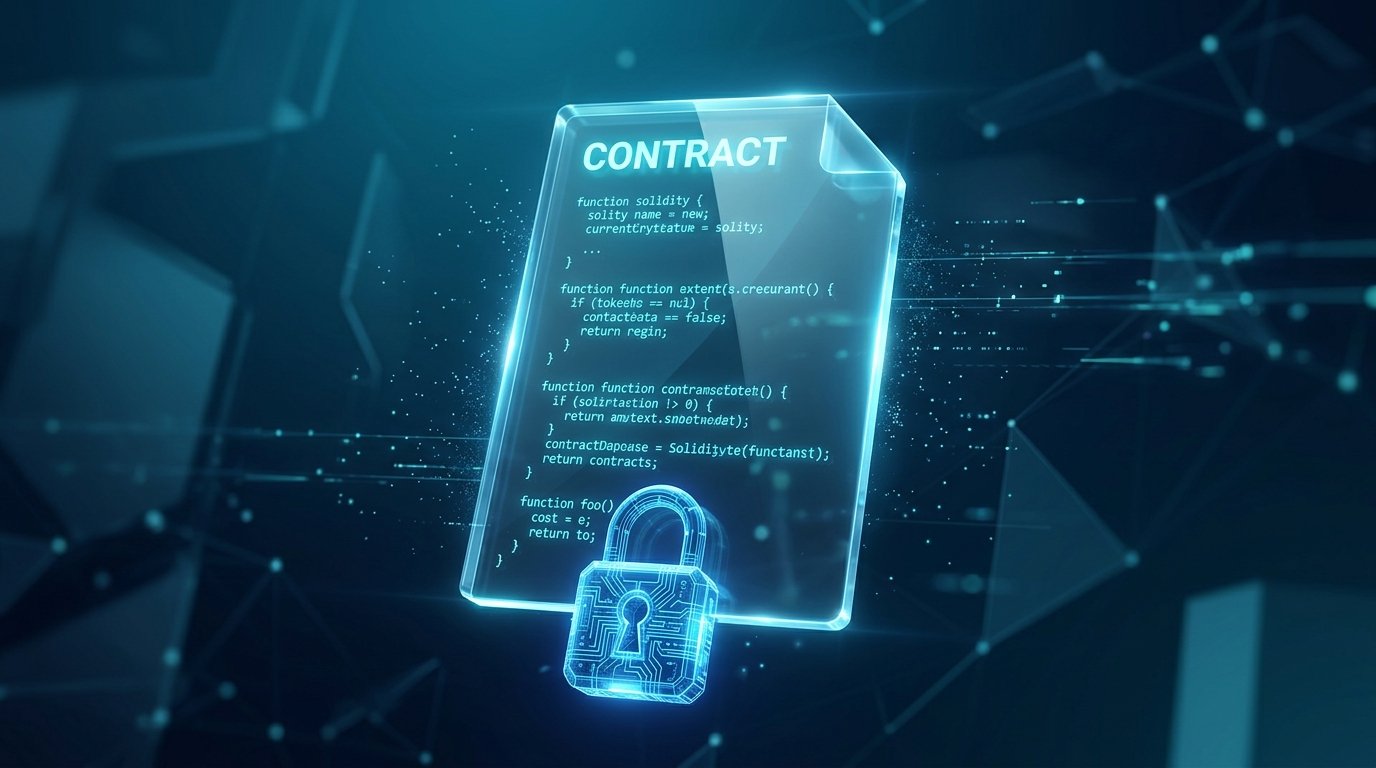
A smart contract is a program stored on a blockchain that automatically executes specific instructions when its conditions are met.
Instead of relying entirely on a bank, company, broker, or other intermediary to perform an agreement, the rules can be written into computer code.
For example, imagine you want to exchange one cryptocurrency for another. A smart contract can define the rules for the exchange, receive the required assets, calculate the transaction according to its programmed logic, and send the resulting assets to the appropriate wallet.
That doesn’t mean smart contracts are perfect or automatically trustworthy. The code can contain bugs, users can interact with malicious contracts, and blockchain transactions are often difficult or impossible to reverse.
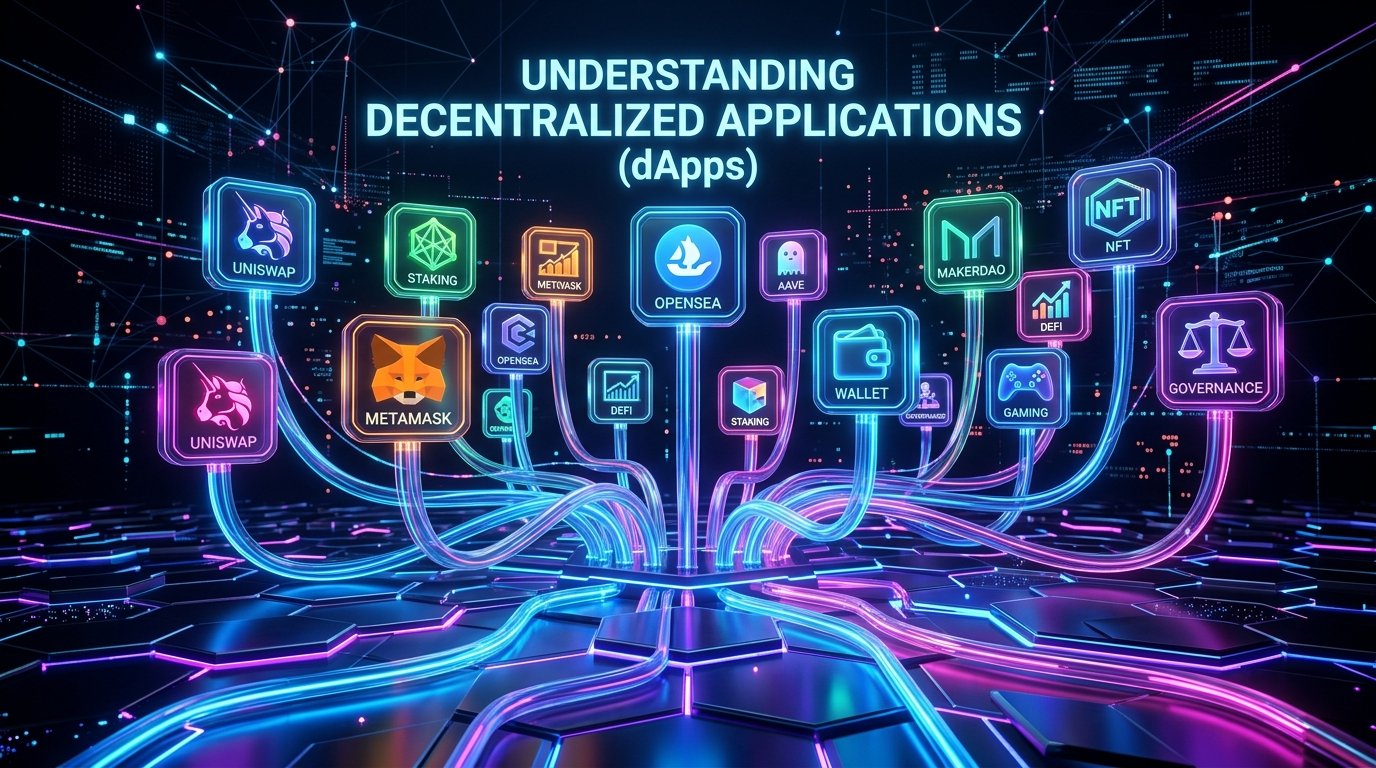
So, understanding how smart contracts work is important before using decentralized applications (DApps), DeFi platforms, NFT marketplaces, or blockchain games.
What Is a Smart Contract?
A smart contract is essentially blockchain-based software that performs predetermined actions according to rules written in code.
The concept is often associated with Ethereum, but smart-contract functionality exists across many blockchain networks.
A traditional contract might say:
If one party provides a certain service, the other party must pay.
Humans, companies, lawyers, banks, or courts may be involved in enforcing that agreement.
A smart contract attempts to automate the execution part using blockchain technology.
For example:
Condition: Wallet A sends 1 ETH.
Action: The contract sends a predefined amount of another token to Wallet A.
The important part is that the smart contract doesn’t “understand” the agreement like a human does. It simply follows its programmed instructions.
How Do Smart Contracts Work?
A simple smart-contract interaction generally looks like this:
- A developer writes the contract code.
- The code is deployed to a blockchain.
- The blockchain records the contract.
- Users interact with the contract through a wallet or application.
- The contract checks the programmed conditions.
- If the conditions are satisfied, it executes the relevant instructions.
- The blockchain records the resulting transaction.
Let’s make this more practical.
Suppose a decentralized application allows users to deposit tokens into a smart contract.
You connect your wallet and click Deposit.
Your wallet creates a blockchain transaction and asks you to approve it.
After you confirm the transaction, the blockchain processes it.
The smart contract checks the transaction and executes its programmed deposit logic.
You don’t need an employee at the application to manually update your account balance. The blockchain and contract code handle the transaction according to the rules.
Smart Contracts Are Not Actually “Smart”
This is one of the first things I would recommend beginners understand.
The word smart can be misleading.
A smart contract doesn’t necessarily:
- Think
- Make independent decisions
- Understand human language
- Know whether something is morally right or wrong
- Automatically know real-world information
It simply executes code.
For example, a contract might contain logic like:
If X happens → perform Y.
That’s closer to an automated computer program than an intelligent human agreement.
Why Are Smart Contracts Important?
Smart contracts are one of the major reasons blockchains can support applications beyond simple cryptocurrency transfers.
Bitcoin primarily introduced decentralized digital money.
Platforms such as Ethereum expanded the concept by allowing developers to deploy programmable applications on a blockchain.
Smart contracts can be used to build systems for:
- Decentralized finance
- Token exchanges
- NFT marketplaces
- Lending applications
- Blockchain games
- DAO systems
- Token creation
- Crowdfunding
- Digital asset management
Instead of every application needing its own centralized database and transaction-processing system, some of its logic can operate through blockchain-based contracts.
A Simple Real-World Example
Imagine a vending machine.
You insert money.
The machine checks whether you inserted enough.
If the conditions are satisfied, it releases the selected product.
A smart contract works somewhat similarly.
For example:
Input: User sends a required amount of cryptocurrency.
Condition: Payment meets the programmed requirements.
Action: Contract transfers an asset or performs another programmed operation.
Of course, blockchain smart contracts are significantly more complex than vending machines, but the analogy helps explain the basic idea.
Smart Contracts and Ethereum
Ethereum is one of the most well-known blockchain platforms for smart contracts.
Developers can create decentralized applications that interact with Ethereum smart contracts.
One commonly used programming language for Ethereum smart contracts is Solidity.
A developer might write a Solidity contract containing rules for:
- Token transfers
- Token creation
- Decentralized exchanges
- NFT ownership
- Voting
- Lending
- Other blockchain applications
After deployment, users can interact with the contract through a compatible wallet and application interface.
This is why you’ll often see smart contracts mentioned when learning about Ethereum and Web3.
What Are Smart Contract Addresses?
When a smart contract is deployed on a blockchain, it receives an address.
This address can look similar to a cryptocurrency wallet address, but they serve different purposes.
A wallet address is generally associated with an account controlled through private keys.
A contract address identifies a deployed smart contract.
This distinction becomes extremely important when sending tokens.
For example, if you are trying to interact with a token or DApp, you may be asked to verify a contract address.
I strongly recommend checking the correct contract address through a trustworthy official source rather than copying one randomly from a social media post.
Scammers sometimes create fake tokens or websites that use addresses designed to look legitimate.
What Can Smart Contracts Do?
Smart contracts can perform many different programmed operations.
1. Token Transfers
A contract can control how tokens are transferred between blockchain addresses.
Many cryptocurrency tokens are implemented using smart-contract standards.
2. Decentralized Exchanges
Platforms can use smart contracts to facilitate token swaps without requiring a traditional centralized exchange to manually process every trade.
A user connects a wallet, selects the assets, reviews the transaction, and approves it.
The smart contract handles the blockchain-side execution.
3. DeFi Applications
Decentralized finance, commonly called DeFi, uses smart contracts for activities such as:
- Lending
- Borrowing
- Token swapping
- Liquidity provision
- Collateral management
However, DeFi contracts can involve significant financial and technical risks.
4. NFTs
NFT marketplaces can use smart contracts to create, transfer, and manage ownership records associated with digital assets.
5. DAOs
A DAO can use smart contracts to implement certain voting and governance rules.
Instead of one company administrator manually making every decision, blockchain-based rules can automate parts of the process.
Smart Contract Example: Buying an NFT
Let’s say you want to purchase an NFT from a marketplace.
The process may look like this:
Step 1: Connect Your Wallet
You connect a wallet such as MetaMask to the marketplace.
Step 2: Select the NFT
You find an NFT and choose the purchase option.
Step 3: Review the Transaction
Your wallet displays transaction information, which may include the payment amount and network fee.
Step 4: Approve the Transaction
You confirm the transaction in your wallet.
Step 5: Smart Contract Executes
The relevant smart contract processes the purchase according to its programmed rules.
Step 6: Blockchain Records the Result
The blockchain records the transaction and the relevant ownership change.
This happens without a traditional employee manually moving the NFT from one account to another.
What Are the Benefits of Smart Contracts?
Automation
Once deployed, smart contracts can automatically execute programmed operations.
This can reduce the need for manual processing.
Transparency
Public blockchains often allow users to inspect transaction histories and contract activity.
Depending on the blockchain and contract, the code may also be publicly available.
Programmability
Developers can build complex applications around programmable blockchain logic.
Reduced Dependence on Intermediaries
Some applications can perform functions without relying on a traditional centralized intermediary for every transaction.
Global Accessibility
Many blockchain applications can be accessed by anyone who meets the network’s technical requirements and applicable legal restrictions.
What Are the Risks of Smart Contracts?
This is where beginners need to be particularly careful.
Smart contracts are not automatically safe just because they exist on a blockchain.
1. Coding Bugs
A programming error can cause unexpected behavior.
Once a contract is deployed, fixing an issue may be difficult depending on how the contract was designed.
2. Malicious Contracts
Scammers can create contracts designed to steal assets or obtain dangerous wallet permissions.
This is why I don’t recommend connecting your main wallet to random DApps.
3. Irreversible Transactions
Many blockchain transactions cannot simply be reversed like a credit-card payment.
If you send assets to the wrong address or approve a malicious transaction, recovering them may be impossible.
4. Oracle Problems
Some smart contracts need external information.
For example, a DeFi application might need a cryptocurrency price.
Because the blockchain itself doesn’t automatically know every real-world event, external data systems called oracles can provide information.
If the data source is incorrect or manipulated, the smart contract can potentially behave incorrectly.
5. Admin Privileges
Some contracts contain administrative functions.
A project may have special keys or roles capable of changing certain settings.
Therefore, don’t assume that every “decentralized” application is completely controlled by immutable code.
Smart Contract Approvals: A Common Beginner Mistake
One of the easiest mistakes to make is approving a token allowance without understanding what you’re authorizing.
For example, a DApp may ask your wallet for permission to access a certain token.
Users sometimes click Approve without reading the transaction.
That can be risky.
Before approving a contract, check:
- Which token is involved?
- Which contract are you interacting with?
- How much are you approving?
- Is the website legitimate?
- Does the transaction make sense?
- Did you reach the website through an official source?
If something looks unusual, stop before signing.
Smart Contracts vs Traditional Contracts
| Feature | Traditional Contract | Smart Contract |
|---|---|---|
| Format | Legal document | Computer code |
| Execution | Often requires people or institutions | Programmed blockchain logic |
| Automation | Usually limited | High |
| Blockchain required | No | Yes |
| Human interpretation | Common | Code follows predefined rules |
| Reversibility | Depends on legal system | Often technically difficult |
| Programming bugs | Not the same type of risk | Major technical risk |
| Transparency | Usually private | Often publicly inspectable |
The two aren’t necessarily direct replacements for each other.
A smart contract can automate certain digital transactions, while traditional legal contracts address obligations and rights in the real world.
How Beginners Can Safely Interact With Smart Contracts
If you’re new to Web3, I recommend starting slowly.
Step 1: Use a Separate Wallet
Don’t immediately connect the wallet holding your important assets to every DApp you find.
A separate wallet can reduce your exposure.
Step 2: Verify the Website
Check the official project website and avoid links sent through random messages.
Fake websites can look almost identical to legitimate ones.
Step 3: Check the Network
Make sure you’re using the correct blockchain.
Sending assets or interacting with the wrong network can create serious problems.
Step 4: Read Wallet Prompts
Don’t blindly click Confirm, Sign, or Approve.
Read what your wallet is asking you to authorize.
Step 5: Start With a Small Amount
If you’re testing a new application, don’t immediately use a large amount of funds.
A small test transaction can help you understand the process.
Step 6: Revoke Unnecessary Approvals
After using certain DApps, you may want to review and revoke token approvals you no longer need using a reputable blockchain approval-management tool.
Smart Contracts and Gas Fees
Smart-contract interactions require blockchain resources.
On networks such as Ethereum, users generally pay transaction fees commonly referred to as gas fees.
A simple cryptocurrency transfer and a complicated smart-contract interaction may consume different amounts of computational resources.
For example:
Simple transfer: Usually involves relatively straightforward blockchain processing.
Token swap: May involve multiple contract operations.
Complex DeFi transaction: Can require considerably more computation.
This is why interacting with a smart contract can sometimes cost more than sending cryptocurrency from one wallet to another.
Can Smart Contracts Be Changed?
It depends on how the contract was designed.
Some contracts are intended to be immutable.
Others use upgrade mechanisms that allow authorized parties to modify parts of the system.
This is an important detail when evaluating a project.
A contract being upgradeable isn’t automatically bad, but it means you should understand who controls the upgrade permissions and what they can change.
Common Smart Contract Mistakes Beginners Make
Mistake 1: Trusting a DApp Because It Looks Professional
A polished website doesn’t prove that the underlying contract is safe.
Mistake 2: Approving Unlimited Token Spending
Always understand what you’re approving.
Mistake 3: Ignoring Contract Addresses
Fake tokens and fake contracts are common scam techniques.
Mistake 4: Using a Main Wallet Everywhere
A dedicated testing or low-value wallet can limit potential damage.
Mistake 5: Assuming Blockchain Means Risk-Free
Blockchain provides certain security properties, but smart-contract vulnerabilities and user mistakes still exist.
Mistake 6: Ignoring Network Fees
A transaction may appear attractive until you account for gas and other costs.
What Tools Can Beginners Use?
You don’t need to become a programmer to understand smart contracts.
Useful tools include:
- MetaMask for interacting with many Web3 applications
- Etherscan for exploring Ethereum transactions and contract activity
- Solscan for exploring Solana blockchain activity
- Block explorers for checking addresses, transactions, and contract information
- Hardware wallets for stronger protection of significant long-term holdings
If you eventually want to build smart contracts, learning Solidity, blockchain development frameworks, and smart-contract security practices becomes much more important.
Do You Need to Learn Programming?
No.
If your goal is simply to use cryptocurrency applications, you can interact with smart contracts through wallet interfaces without knowing how to code.
However, if you want to create smart contracts, programming knowledge is essential.
For Ethereum-compatible networks, Solidity is one of the main languages developers learn.
I’d recommend learning basic blockchain concepts first:
Wallets → Transactions → Gas → Smart Contracts → Solidity → DApp Development
This makes the learning process much easier than jumping directly into programming.
Final Thoughts
Smart contracts are essentially programs that run on blockchain networks and execute predefined instructions.
They are the technology behind many Web3 applications, including decentralized exchanges, DeFi platforms, NFT marketplaces, DAOs, and blockchain-based games.
The most important thing for beginners to remember is that smart contracts aren’t intelligent or automatically safe. They simply execute code, and that code can contain bugs, unexpected behavior, or potentially dangerous functions.
When I use a new blockchain application, I treat every transaction request as something worth checking rather than automatically approving. Verifying the website, checking the network, understanding wallet prompts, and testing with small amounts can prevent many avoidable mistakes.
Once you understand wallets, transactions, gas fees, and smart-contract approvals, the wider Web3 ecosystem becomes much easier to understand.