When I first started exploring Web3, I kept seeing the term dApp everywhere.
People talked about decentralized exchanges, NFT marketplaces, blockchain games, lending platforms, and Web3 applications. At first, I assumed a dApp was simply a normal website with cryptocurrency payments added to it.
That’s not quite right.
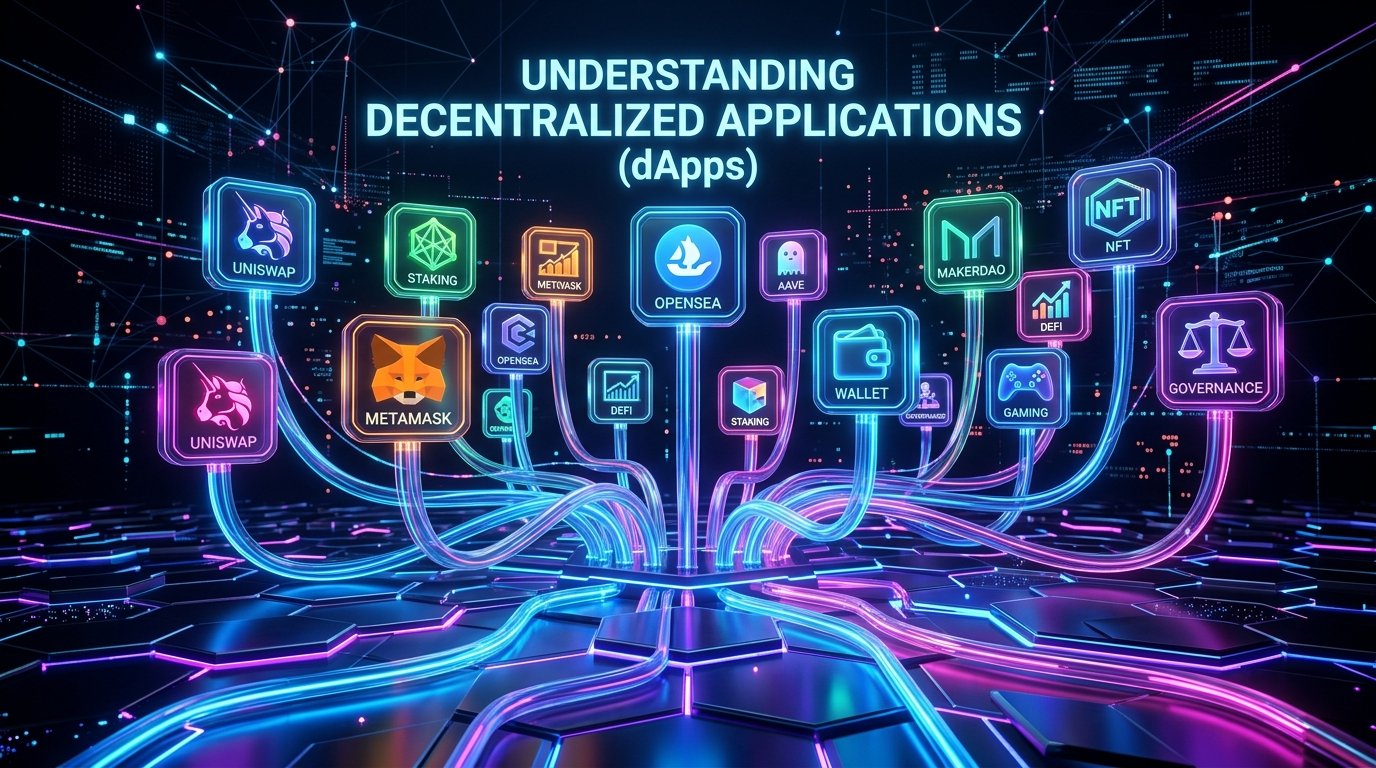
A decentralized application, commonly called a dApp, is an application that uses blockchain networks and smart contracts for some or all of its core functionality.
The interface can look surprisingly similar to a normal website or mobile application. The major difference is what’s happening behind that interface.
Instead of relying entirely on a company’s private database and centralized backend, a dApp can use blockchain networks and smart contracts to handle important operations.
This creates a different model for building applications, but it also introduces new risks and technical limitations.
Let’s break down how dApps actually work.
What Is a dApp?
A dApp is a decentralized application that interacts with blockchain infrastructure, usually through smart contracts.
The word can be separated into:
d = decentralized
App = application
A traditional application might look like:
User → Website/App → Company Server → Database
A blockchain-based application can look more like:
User → dApp Interface → Wallet → Blockchain → Smart Contract
The exact architecture varies from project to project.
Not every application calling itself a dApp is equally decentralized.
Some applications decentralize their smart-contract logic but still use centralized websites, servers, APIs, databases, or development teams.
That’s why it’s better to think of decentralization as a spectrum, rather than an all-or-nothing label.
How Are dApps Different From Normal Apps?
Consider a traditional banking application.
You open your banking app and see your account balance.
The application communicates with the bank’s infrastructure, which controls the database containing your account information.
The bank can update that database and process transactions through its own systems.
With a blockchain-based application, some of the important information and logic can exist on a public blockchain.
For example:
Traditional application
User → Company → Private database
dApp
User → Wallet → Smart contract → Blockchain
The difference is mainly about where the application’s rules and data are handled and who controls them.
The Core Components of a dApp
Most dApps rely on several important components.
1. Frontend Interface
This is the part you see.
It might look like a normal website with:
- Buttons
- Menus
- Charts
- Forms
- Wallet connection options
- Transaction screens
For example, a decentralized exchange can have a familiar interface where you select:
ETH → USDC
and enter the amount.
The interface itself isn’t necessarily decentralized.
It’s simply the part that allows you to interact with the underlying blockchain system.
2. Smart Contracts
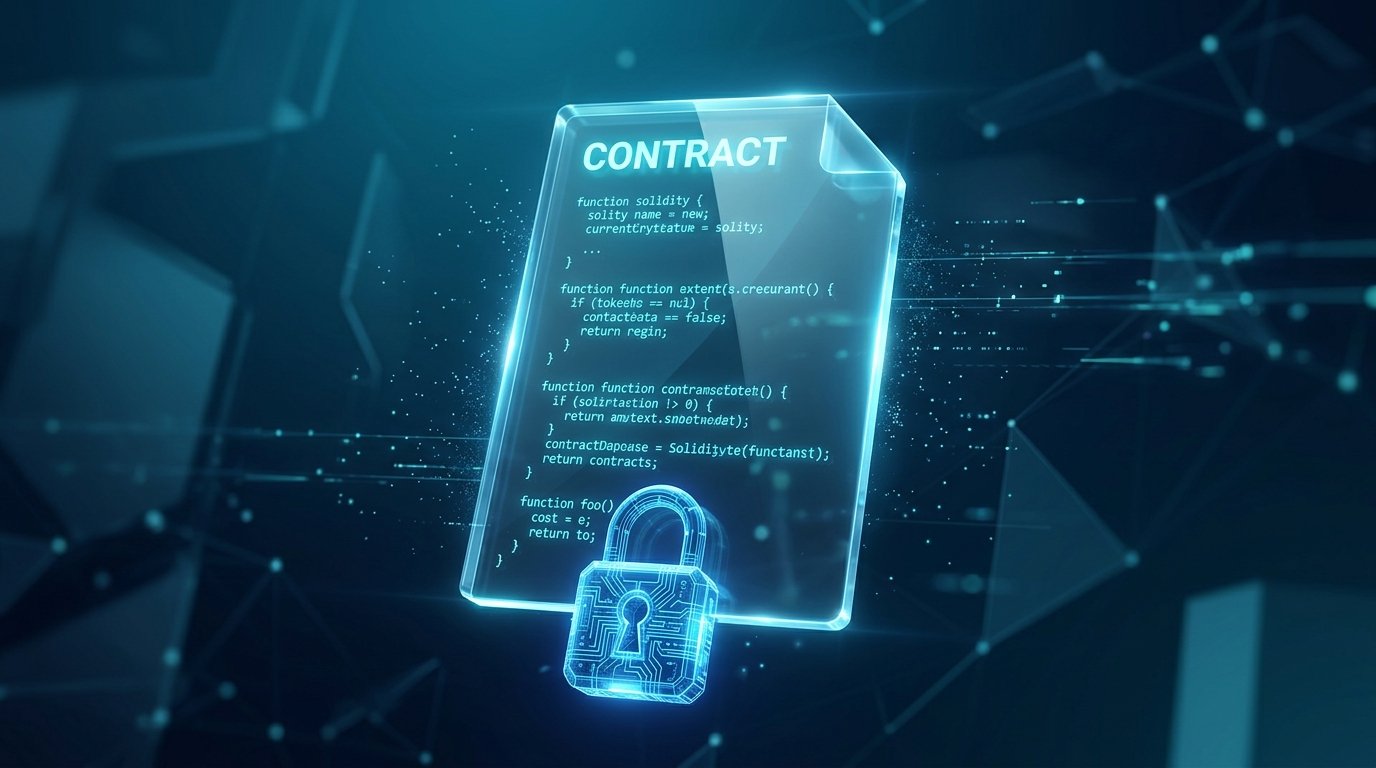
Smart contracts are often the most important component of a dApp.
A smart contract is blockchain-based software containing predefined instructions.
For example, a decentralized exchange can have smart contracts responsible for operations such as:
- Token swaps
- Liquidity management
- Fee calculations
- Token transfers
When you interact with the dApp, your wallet may submit a blockchain transaction that calls a smart-contract function.
The blockchain then processes that transaction according to the contract’s code.
3. Blockchain Network
The blockchain provides the underlying infrastructure.
Depending on the application, it might use:
- Ethereum
- Solana
- Arbitrum
- Base
- Polygon
- BNB Chain
- Other compatible networks
The blockchain records transactions and executes supported smart-contract operations.
This is one reason choosing the correct network is so important when using a dApp.
4. Crypto Wallet
A wallet is usually the user’s gateway into a dApp.
Instead of creating a traditional username and password account, a Web3 application may ask you to connect a wallet.
Examples include:
- MetaMask
- Phantom
- Coinbase Wallet
- Rabby
The wallet can allow you to:
- Identify your blockchain address
- Sign messages
- Approve transactions
- Send assets
- Interact with smart contracts
The wallet doesn’t necessarily store your cryptocurrency “inside” the app.
Instead, it provides access to blockchain accounts and the cryptographic keys needed to authorize transactions.
5. Blockchain Data
A dApp may read blockchain information to display things such as:
- Token balances
- NFT ownership
- Transaction history
- Smart-contract activity
- Account positions
The frontend can retrieve blockchain data and present it in a user-friendly format.
This is one reason a dApp can look like a normal application even though the underlying data may come from a blockchain.
How Does a dApp Work?
Let’s walk through a simple example.
Imagine you’re using a decentralized exchange to swap ETH for another token.
Step 1: Open the dApp
You visit the application’s interface.
Step 2: Connect Your Wallet
You click Connect Wallet.
Your wallet asks for permission to connect.
Step 3: Select Your Tokens
You choose the cryptocurrency you want to sell and the asset you want to receive.
Step 4: Review the Quote
The dApp calculates an estimated exchange rate and may display:
- Amount received
- Network fee
- Price impact
- Slippage settings
Step 5: Approve the Token
Depending on the asset and transaction structure, you may first need to approve the smart contract to spend a token.
Step 6: Confirm the Swap
Your wallet shows a transaction request.
You review it and confirm if everything looks correct.
Step 7: Blockchain Processes the Transaction
The transaction is broadcast to the blockchain.
Step 8: Smart Contract Executes
The relevant smart-contract logic performs the swap.
Step 9: Your Wallet Updates
After confirmation, the resulting token balance becomes visible.
The entire process may feel similar to using a traditional financial application, but the underlying transaction flow is different.
What Is the Backend of a dApp?
This is where things become interesting.
A normal application might have:
Frontend → Backend server → Database
A dApp can instead use:
Frontend → Smart contracts → Blockchain
However, real-world dApps often use a hybrid architecture.
They may still rely on centralized services for things such as:
- User interfaces
- Search
- Analytics
- Notifications
- APIs
- Images
- Indexing
- Off-chain databases
So when someone says a dApp is “decentralized,” it’s worth asking:
Which parts are actually decentralized?
On-Chain vs Off-Chain Data
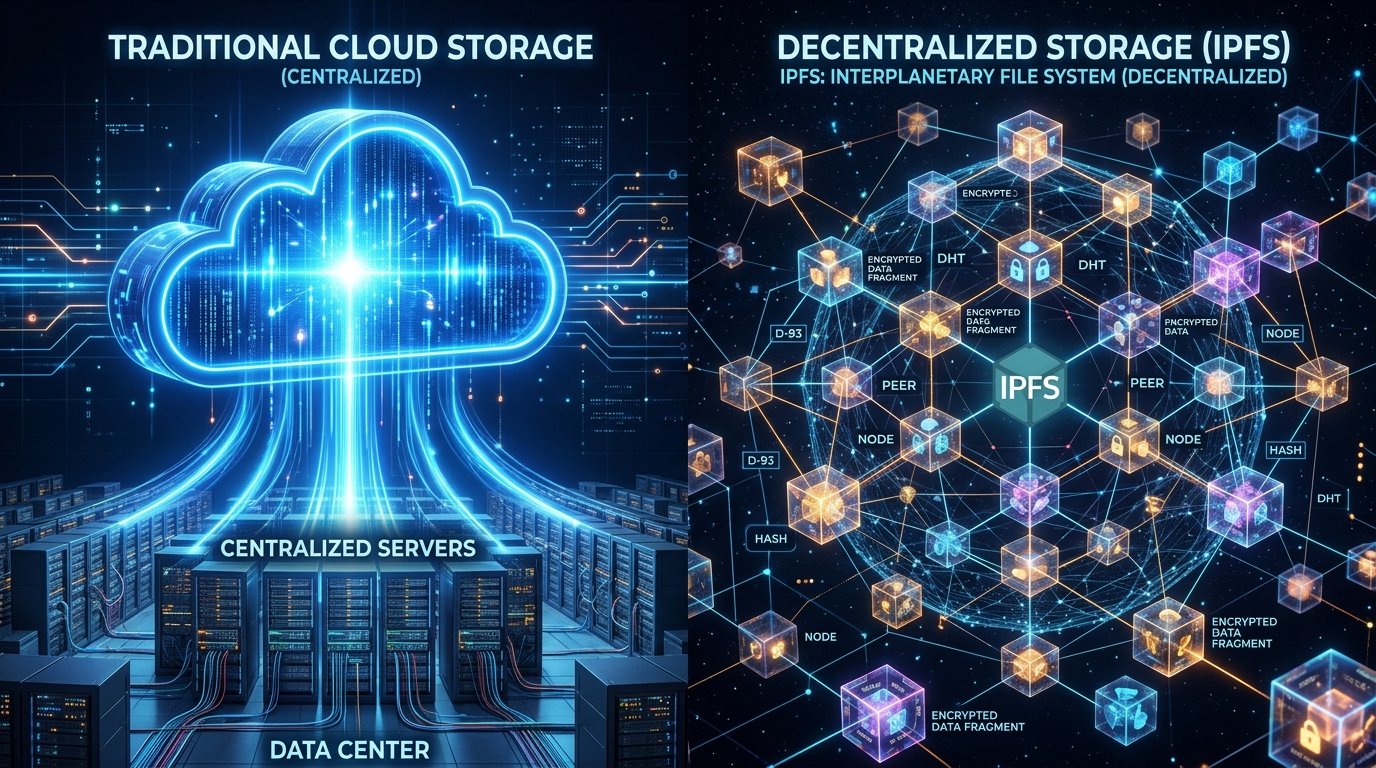
One of the most important concepts for understanding dApps is the difference between on-chain and off-chain data.
On-Chain
Information stored or processed on a blockchain.
Examples can include:
- Token transfers
- Smart-contract state
- Ownership records
- Transaction history
Off-Chain
Information stored outside the blockchain.
Examples can include:
- Website images
- User interface settings
- Search indexes
- Large files
- Analytics data
Putting every piece of information on-chain can be expensive and inefficient.
That’s why many practical dApps combine on-chain and off-chain infrastructure.
Why Do dApps Need Smart Contracts?
Smart contracts provide programmable rules.
Imagine a decentralized lending application.
A smart contract might contain logic that says:
User deposits collateral → Contract records collateral → User borrows within defined limits
If the collateral value falls below certain conditions, the contract may trigger another programmed action.
The important point is that the blockchain executes the contract according to its code rather than relying entirely on a traditional company’s private database.
Types of dApps
There are many categories.
Decentralized Finance dApps
Known as DeFi, these include applications for:
- Token swapping
- Lending
- Borrowing
- Liquidity provision
- Derivatives
NFT dApps
These can provide:
- NFT marketplaces
- NFT minting
- Collection management
- NFT-based games
Gaming dApps
Blockchain games can use smart contracts for certain aspects of:
- Digital asset ownership
- In-game economies
- NFT items
- Player transactions
Social dApps
Some Web3 projects experiment with decentralized social networks where users can have greater control over identity or digital assets.
DAO Applications
DAOs can use blockchain governance mechanisms for voting and community decision-making.
What Makes a dApp Decentralized?
This question is more complicated than it initially appears.
A truly decentralized application may attempt to distribute control across:
- Blockchain validators
- Smart contracts
- Governance participants
- Multiple infrastructure providers
But a dApp might still have a centralized frontend.
For example, imagine:
Smart contracts: Decentralized
Blockchain: Decentralized
Website: Controlled by one company
The application isn’t necessarily fully decentralized from end to end.
This is why I avoid assuming that the word “dApp” automatically means “no company is involved.”
Benefits of dApps
Reduced Dependence on Centralized Intermediaries
Some applications can perform financial or digital operations directly through smart contracts.
Transparency
Public blockchain transactions can often be inspected using blockchain explorers.
User-Controlled Wallets
Users can interact using their own blockchain wallets instead of maintaining balances entirely inside a company’s private database.
Global Accessibility
Blockchain applications can potentially serve users across different countries, subject to network access and applicable laws.
Programmability
Smart contracts allow developers to build complex systems around programmable rules.
Problems and Limitations of dApps
dApps aren’t perfect.
1. Transaction Fees
Blockchain transactions can require network fees.
On congested networks, costs can increase.
2. Slow Confirmation
Some blockchain transactions can take time to confirm.
3. Smart Contract Bugs
A vulnerability in the contract can potentially cause significant damage.
4. User Responsibility
There may be no traditional customer-support department capable of reversing a transaction.
5. Difficult User Experience
Wallets, networks, gas fees, signatures, and transaction approvals can confuse beginners.
6. Scalability
Some blockchain networks have limitations in transaction throughput.
Layer 2 networks and other scaling technologies attempt to address some of these limitations.
dApp Security: Why You Need to Be Careful
One thing I learned quickly when exploring Web3 is that connecting a wallet is not something I treat casually.
A malicious website can potentially ask you to sign a dangerous transaction or approve token spending.
Before interacting with a dApp, check:
- Is the website URL correct?
- Did you find it through an official project source?
- Is the contract address legitimate?
- What network are you using?
- What exactly is the wallet asking you to approve?
- Are you granting token spending permission?
- Does the transaction make sense?
Never provide your:
Seed phrase
or
Private key
to a website claiming it needs them to connect your wallet.
A legitimate dApp should not need your wallet’s private recovery credentials.
Wallet Connection vs Transaction Approval
Beginners sometimes confuse these two actions.
Connecting a Wallet
A website requests permission to see certain wallet information and interact with your account through supported wallet functionality.
Approving a Transaction
You authorize a blockchain transaction or message.
This can have financial consequences.
For example:
Connect Wallet → Usually establishes a connection
Approve Transaction → Can authorize blockchain activity
Always read the wallet prompt carefully.
What Are Gas Fees in dApps?
Most blockchain-based dApps require transactions to be processed by a network.
Those transactions can require fees.
For example, using a DeFi application might involve:
- Token approval
- Swap transaction
That could mean two separate blockchain transactions and therefore potentially two sets of network fees.
Some applications use Layer 2 networks such as Arbitrum or Base to reduce transaction costs compared with performing the same type of activity directly on Ethereum mainnet, although fees and conditions vary.
How to Check a dApp Transaction
When I want to understand what happened after a blockchain transaction, a block explorer is one of the most useful tools.
Depending on the network, you can use explorers to inspect:
- Transaction status
- Sending address
- Receiving address
- Contract address
- Token transfers
- Gas used
- Block confirmation
For Ethereum, Etherscan is a commonly used explorer.
For Solana, explorers such as Solscan can provide similar blockchain information.
This is especially useful when your wallet shows a transaction as pending, failed, or completed but the application’s interface hasn’t updated yet.
Common dApp Mistakes Beginners Make
Mistake 1: Connecting to Random Websites
A website can look professional and still be malicious.
Mistake 2: Blindly Signing Messages
Not every signature request is harmless.
Understand what you’re signing.
Mistake 3: Approving Unlimited Spending
Token approvals can give contracts permission to spend tokens according to the allowance.
Review permissions carefully.
Mistake 4: Using the Wrong Network
You may have funds on Ethereum while the dApp is currently connected to another network.
Mistake 5: Ignoring Slippage
In decentralized trading, price movement can affect the amount you receive.
Mistake 6: Assuming a dApp Is Fully Decentralized
Look at its architecture and governance rather than trusting the label.
Mistake 7: Using a Main Wallet for Every Experiment
A separate wallet with limited funds can reduce potential exposure when testing unfamiliar applications.
How to Start Using dApps Safely
If you’re completely new, I’d use this simple process.
Step 1: Learn the Blockchain
Understand wallets, addresses, transactions, and network fees first.
Step 2: Create a Separate Wallet
Use a wallet dedicated to experimentation if you’re testing unfamiliar applications.
Step 3: Fund It With a Small Amount
Don’t transfer significant funds while you’re still learning.
Step 4: Find the Official dApp Website
Avoid random links from social media comments or direct messages.
Step 5: Connect Your Wallet
Read the connection request.
Step 6: Review Every Transaction
Check the asset, amount, network, contract, and fees.
Step 7: Confirm
Only approve the transaction if you understand what you’re authorizing.
Step 8: Verify on a Block Explorer
After the transaction, you can use a blockchain explorer to verify the result.
dApps vs Traditional Apps
| Feature | Traditional App | dApp |
|---|---|---|
| Backend | Centralized servers | Smart contracts/blockchain + possible off-chain services |
| Data | Usually private databases | Blockchain + off-chain data |
| Account | Username/password commonly used | Wallet commonly used |
| Payments | Banks/payment processors | Blockchain transactions |
| Control | Usually company-controlled | Can be distributed depending on design |
| Fees | Often hidden/subscription-based | Blockchain network fees may apply |
| Transactions | Often reversible by provider | Often difficult to reverse |
| Transparency | Usually limited | Blockchain activity can often be inspected |
| Speed | Usually fast | Depends on blockchain |
| User responsibility | Lower | Often higher |
Are dApps Better Than Traditional Apps?
Not necessarily.
They solve different problems.
For example, I would happily use a traditional application for:
- Video streaming
- Cloud storage
- Office documents
- Everyday communication
A dApp can make more sense when blockchain ownership or programmable transactions are actually useful.
Examples include:
- Decentralized trading
- On-chain asset ownership
- Blockchain-based governance
- Certain financial applications
- NFT systems
Using blockchain just for the sake of calling an application decentralized doesn’t automatically make it better.
What Does the Future of dApps Look Like?
One of the biggest challenges for dApps is user experience.
A beginner shouldn’t have to understand:
- Private keys
- Gas prices
- RPC endpoints
- Contract addresses
- Network switching
- Token approvals
just to perform a simple action.
Developers are working toward interfaces that hide much of this complexity.
Layer 2 networks and account-abstraction technologies are also attempting to make blockchain applications easier and cheaper to use.
The goal is essentially to make the blockchain infrastructure less visible to ordinary users while preserving useful blockchain properties where they actually matter.
Final Thoughts
Decentralized applications, or dApps, are applications that use blockchain infrastructure and smart contracts for important parts of their functionality.
They can look almost identical to normal websites, but their backend architecture can be very different.
A typical dApp may combine a frontend interface, crypto wallet, smart contracts, blockchain network, and off-chain services. When you interact with it, your wallet can authorize blockchain transactions and the relevant smart contracts execute according to their programmed rules.
The biggest thing I would recommend to beginners is not to confuse a polished Web3 interface with a safe application. Always verify the official website, understand what you’re signing, check the network, and avoid giving anyone your seed phrase or private key.
Once you understand the basic flow — dApp → wallet → transaction → smart contract → blockchain — many parts of Web3 become much easier to understand.